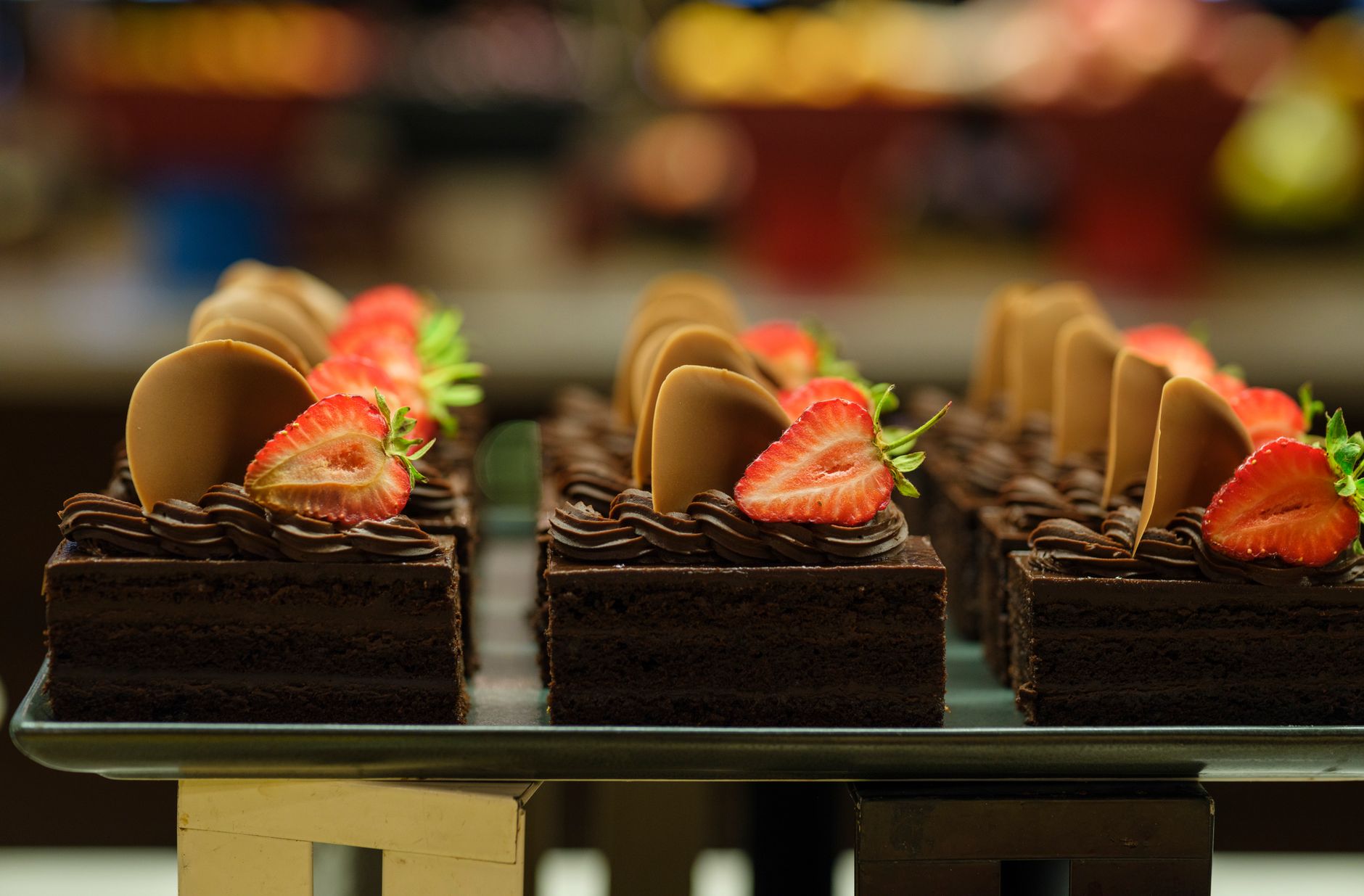
Decadent is an adjective that describes a state of decline brought on by excessive indulgence, luxury, or a loosening of moral standards. A decadent lifestyle involves pursuing pleasure at the expense of restraint or responsibility. A decadent dessert, by contrast, is rich enough to feel almost sinfully satisfying. The word does real work in both serious and casual contexts, which makes it worth understanding precisely.
Core definition of decadent
Decadent comes from the Latin decadere, meaning "to fall" or "to decay." The same root gives English "decay" and "decadence." The adjective entered English in the late 19th century, partly through French literary culture, where la décadence described a movement of writers and artists who embraced excess, artifice, and sensation over conventional moral order.
Today, decadent carries two main senses:
- Moral or cultural decline: A society, era, or group described as decadent has abandoned discipline or virtue in favour of self-gratification. Think of Rome in its later empire, or any culture critics describe as corrupted by wealth and idleness.
- Rich, indulgent pleasure: This is the word's everyday sense. A decadent chocolate cake, a decadent spa weekend, a decadent hotel suite. Here the word carries mostly positive warmth, with just a whisper of guilty pleasure.
Context tells you which sense applies. When a historian calls a civilization decadent, it's a diagnosis of collapse. When a food blogger calls a brownie decadent, it's high praise.
How to use decadent in a sentence
Decadent works as a straightforward attributive or predicative adjective. It sits before a noun or follows a linking verb.
Describing food or luxury:
"The restaurant served a decadent tasting menu of twelve courses, each richer than the last." Here, decadent signals indulgence without any moral judgment. It sets an expectation of abundance.
Describing cultural or social decay:
"Critics at the time dismissed the Weimar cabaret scene as decadent, though later historians recognised its fierce creative energy." In this use, decadent carries a charge of disapproval, often reflecting the speaker's values as much as the subject itself.
Describing art or style:
"His prose was lush and decadent, piling clause on clause until the sentence almost buckled under its own weight." Writers in the tradition of Oscar Wilde or J.-K. Huysmans are frequently called decadent in this sense.
One thing to watch: decadent is sometimes used so loosely that it loses its edge. Calling a marginally nicer hotel "decadent" when you mean "comfortable" dilutes the word. Reserve it for genuine excess, not mild comfort. That's how zeal for precise vocabulary pays off in writing that actually lands.
Decadent vs. decadence
Decadent is the adjective. Decadence is the noun. They share the same root and the same two senses, but they don't swap positions in a sentence.
Correct: "The late empire descended into decadence." Correct: "The late empire became decadent." Wrong: "The late empire descended into decadent." The last example treats the adjective as a noun, which doesn't work.
A common companion word is "moral": moral decadence, morally decadent. Both phrasings work, but they can read as redundant in careful writing since the word already implies a moral dimension when used in that sense.
The Decadent movement in literature and art
The late 19th century produced a formal artistic movement that called itself Decadent. Its members included Oscar Wilde in England, Charles Baudelaire and Paul Verlaine in France, and Aubrey Beardsley as its defining visual artist. The movement treated artifice as superior to nature, sensation as a valid end in itself, and beauty as its own justification regardless of moral content.
Wilde's The Picture of Dorian Gray is the most widely read novel in the Decadent tradition. Its preface asserts that "there is no such thing as a moral or an immoral book." That claim was scandalous in 1890. Today it reads as a position in literary theory.
Understanding this history matters for reading. When a critic calls a 19th-century author decadent, the word places that writer in a specific artistic lineage. It doesn't simply mean "indulgent." It points to a philosophy of aesthetics that deliberately rejected Victorian moralism.
Related words and near-synonyms
Several words overlap with decadent but each carries its own emphasis:
Dissolute focuses on loose, immoral living without the aesthetic or cultural dimension. A dissolute person wastes their life on vices. A decadent one does so with style and intention.
Sybaritic means devoted to luxury and pleasure, drawn from Sybaris, a Greek city in southern Italy famous for its extreme wealth. It's a near-synonym for the luxurious sense of decadent, though far less common.
Indulgent is softer and carries less moral weight. Indulgent can simply mean lenient or permissive. Decadent implies an excess that tips into something questionable.
Degenerate shares the sense of decline from a higher state but leans harder into contempt. Degenerate is more aggressive as an insult; decadent can be used admiringly.
The word nefarious describes deliberate wickedness rather than pleasurable excess, so it doesn't overlap directly with decadent, but both words operate in the moral register of disapproval.
Common mistakes with decadent
The main error is confusing decadent with "decayed" or "decrepit." Decay is a process of physical deterioration. Decadent implies self-indulgent excess, not physical ruin. A crumbling old building isn't decadent; a gilded ballroom used for nightly banquets while its owners ignore their debts might be.
A second mistake is spelling. Decadent has no double letters and no silent syllables: DEC-a-dent, three syllables, stress on the first. It's not "decadant" or "decident." The noun decadence follows the same pattern: DEC-a-dence.
A third issue is register. In formal or academic writing, the cultural sense of decadent is common and carries weight. In casual writing about food or travel, the pleasurable sense is the natural choice. Mixing them without context can confuse readers who expect one sense and receive the other.
Quick reference
Part of speech: adjective. Noun form: decadence. Adverb form: decadently. Pronunciation: /ˈdɛk.ə.dənt/. First known use in English: approximately 1837, drawn from French décadent.
Decadent is one of those words that rewards careful use. Choose it when you want to signal that something tips over the edge of mere pleasure into something richer, more complicated, or slightly transgressive. That's the charge the word has carried since the 19th century, and it hasn't dimmed.