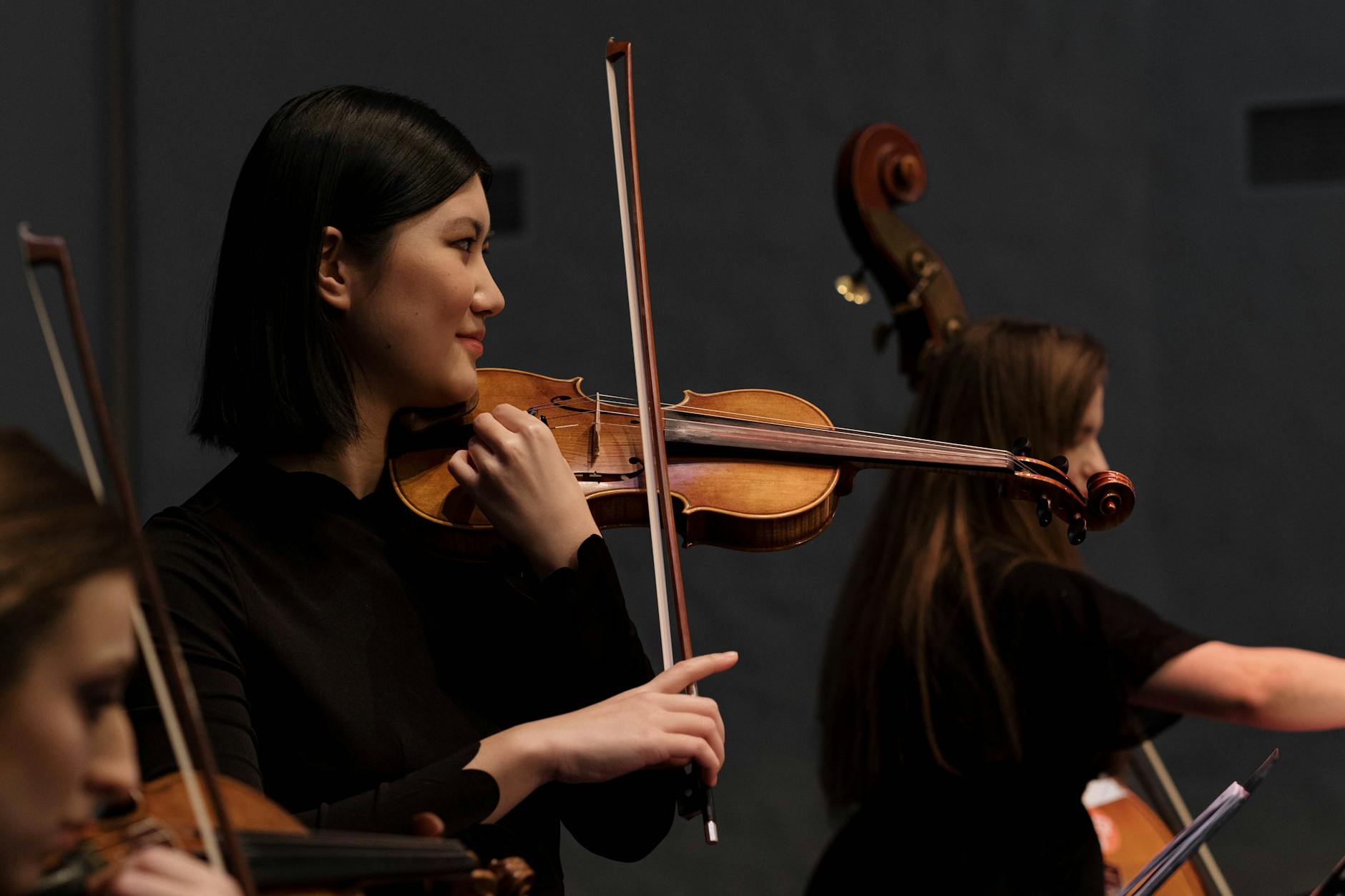
Allegro is one of the most frequently seen words in a musical score. It appears at the top of a movement, telling the performer exactly how fast and with what spirit to play. The word comes from Italian, where it means "merry" or "lively," and that sense of energised cheerfulness sits behind every use of it in music. Understanding allegro properly means understanding not just a speed, but a mood.
What allegro means
In music, allegro is a tempo marking indicating a fast, brisk pace. It typically corresponds to a metronome range of around 120 to 168 beats per minute, though this varies by era and edition. The direction sits above andante (moderate, walking pace) and below presto (very fast). So allegro occupies a confident, energetic middle-to-upper range on the tempo scale.
The word also carries an expressive quality, not just a speed. A passage marked allegro isn't simply fast; it's meant to feel buoyant and forward-moving. Composers use it when they want music to feel driven rather than urgent, bright rather than breathless. That distinction matters when performers interpret the marking.
For a contrasting look at the slower end of the tempo spectrum, the definition of andante explains how that marking creates a very different kind of movement, paced more like a deliberate walk than a sprint.
How allegro is used in practice
Allegro appears in two main forms. First, as a standalone marking at the start of a movement. Second, as part of a compound direction that fine-tunes the character of the tempo.
Common compound forms include:
- Allegretto: slightly slower and lighter than allegro, more delicate in character.
- Allegro vivace: fast and very lively, close to the upper limit before presto.
- Allegro moderato: fast, but pulled back toward the moderate range, with more composure.
- Allegro ma non troppo: fast, but not too much so. A common instruction in Beethoven's scores.
Ludwig van Beethoven's Symphony No. 5 opens with one of the most recognisable allegro con brio passages in the repertoire. The marking means fast, with vigour. Those four notes arrive with a force that the tempo and character direction together demand. Neither the speed nor the brio can be missing.
The word outside music
Allegro occasionally appears outside the concert hall. In everyday Italian, it still means cheerful or lively. English writers sometimes borrow it as an adjective or adverb to describe something done with quick energy, though this use is literary and uncommon. You're more likely to see it in the name of a car model, a software product, or a dance studio than in standard prose.
Apache Velocity once shipped a related project under the Allegro name. The branding choice followed a pattern: tech companies reach for classical music terms when they want to signal speed and elegance. Allegro, vivace, and presto all appear in product names for exactly this reason.
Allegro vs similar tempo markings
Knowing allegro is most useful when you can place it on a continuum. From slowest to fastest, the standard Italian tempo markings run roughly like this: largo, adagio, andante, moderato, allegretto, allegro, vivace, presto, prestissimo. Each term combines a speed with a character, and they don't translate cleanly into beats per minute because composers have never agreed on precise numbers. Context, period, and instrument all shift the interpretation.
The gap between allegretto and allegro is worth noting. Allegretto is not simply a "slightly slower allegro." It has a lighter, more graceful character. Allegro is more purposeful, more driven. When Beethoven chose allegretto for the second movement of his Seventh Symphony, he picked a word that suggested a different quality of motion entirely, not just a reduced speed.
How to use allegro in writing
In a musical context, allegro works as a noun, adjective, or adverb. "The allegro opens brilliantly" uses it as a noun, referring to an entire movement marked at that tempo. "The allegro passage builds intensity" uses it as an adjective. "Play it allegro" uses it as an adverb, directing the performer.
Outside music, treat allegro as a loanword rather than standard English vocabulary. It fits naturally in arts writing, criticism, and biography. It reads as pretentious or unclear in most other contexts. If the audience isn't musical, reach for plain English: "fast and lively" does the same job without the risk of confusion.
The word's Italian root connects it to a cluster of related terms worth knowing. Vivacious, the English adjective meaning full of lively energy, shares the same family of ideas. English absorbed vivace (a step faster than allegro) from the same source. These words cluster around a shared concept: life, energy, and forward motion expressed through sound.
A note on pronunciation
Allegro is pronounced uh-LEG-roh, with the stress on the second syllable. The double-l in Italian is pronounced as a single clean l, not a drawn-out sound. The final o is open and clear. Musicians reading from an Italian-tradition score have no problem with it; non-musicians sometimes mis-stress it as AL-uh-groh, which shifts the word's weight in a way that sounds slightly off to trained ears.
It's worth knowing that English has absorbed the word without fully naturalising it. Most dictionaries list it under musical terminology rather than as a general English word, which is accurate. Use it where its precision earns its place, and you'll reach for it at exactly the right moments.