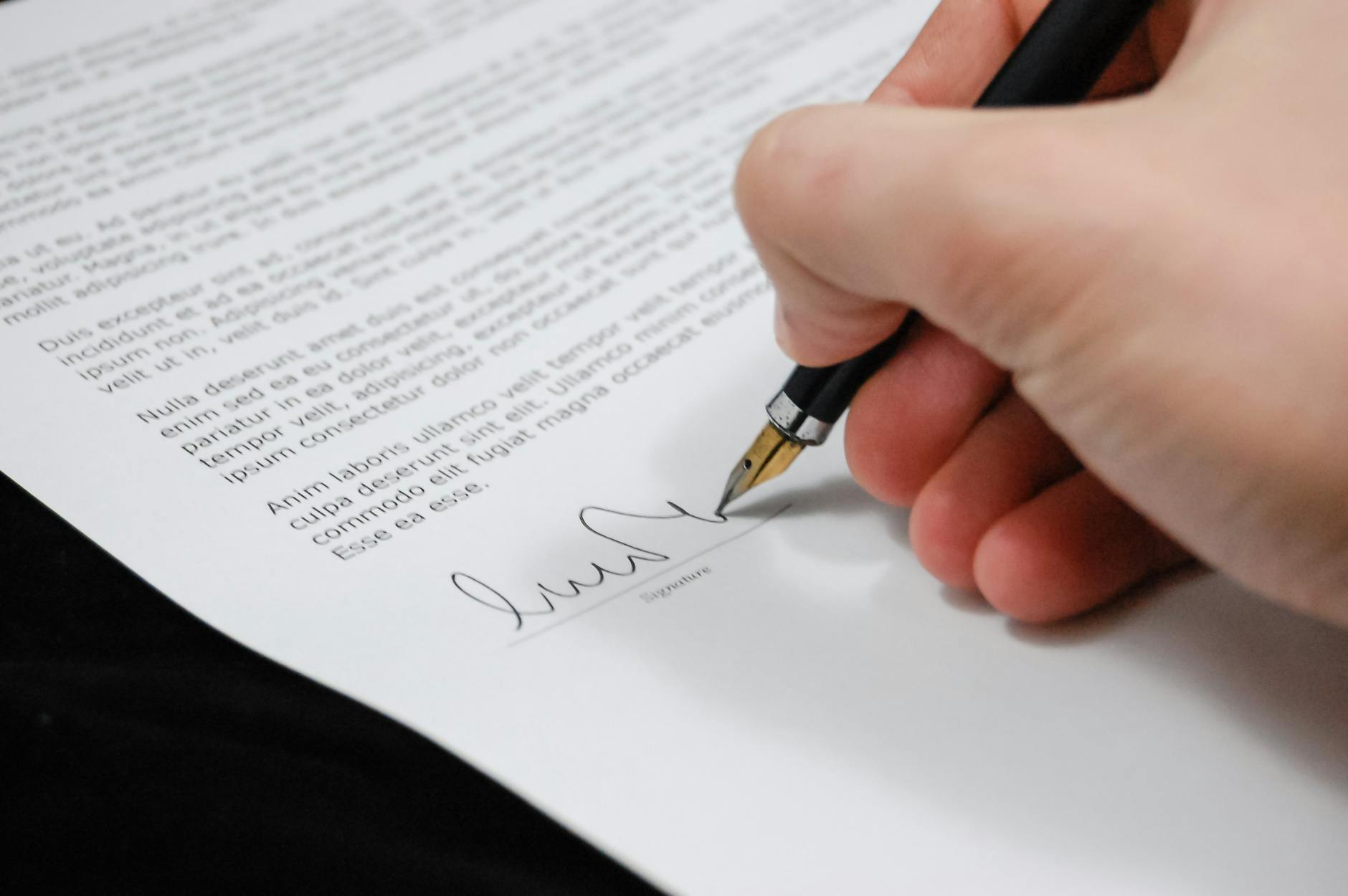
Aforementioned means previously mentioned or referred to earlier in the same document or conversation. It's a formal adjective used to point back at something already named, saving the writer from repeating a noun in full. You'll find it most often in legal contracts, academic papers, and official reports, where precise back-references matter. In everyday writing, it can feel stiff, so knowing exactly when to reach for it keeps your prose clean.
What aforementioned means
The word breaks down simply. "Afore" is an older English prefix meaning "before" or "previously," and "mentioned" does exactly what it says. Put together, aforementioned means "mentioned before this point." It functions as an adjective, always modifying a noun: the aforementioned contract, the aforementioned parties, the aforementioned report.
It doesn't carry any emotional charge. It's purely a reference word, a pointer. Its job is to tell the reader: look back, we already introduced this.
How to use aforementioned correctly
Aforementioned always comes before a noun, and the noun it modifies must actually have appeared earlier in the text. That's the rule. If the thing hasn't been mentioned yet, aforementioned is the wrong word.
Here are three sentences that use it correctly:
- "The tenant shall comply with the aforementioned conditions of the lease."
- "The aforementioned study found a 12 percent reduction in error rates."
- "All payments due under the aforementioned agreement must be received by the 15th."
Notice that in each case, the noun it modifies (conditions, study, agreement) was introduced earlier in the document. That's the only situation where aforementioned earns its place.
When not to use aforementioned
Aforementioned belongs in formal writing. It sounds odd in casual conversation and clunky in most blog posts or emails. If you're tempted to write "the aforementioned meeting," ask whether "the meeting I mentioned earlier" or simply "that meeting" does the same job more naturally. Often it does.
Writers sometimes drop aforementioned into a sentence to sound authoritative. This usually backfires. The word draws attention to itself. In a sentence like "please see the aforementioned attached file," it adds nothing that "the attached file" doesn't already convey, and it makes the writing feel bureaucratic rather than clear. Much like a punctilious style can become an end in itself rather than a means to clarity, overuse of formal pointer words can make prose harder to follow.
The sweet spot is legal and quasi-legal text, academic citations, and formal contracts. Outside those contexts, use it sparingly.
Aforementioned vs other back-reference words
English offers several ways to point backwards in a text. Aforementioned is the most formal. "Aforesaid" is older and even more legalistic; you'll see it in older statutes and deeds. "The above-mentioned" is slightly less formal and common in technical reports. "The said" (as in "the said company") is another legal convention, though it's falling out of use in modern drafting.
In academic writing, writers often use "the latter," "the former," or a simple pronoun in place of aforementioned. The choice depends on how far back the original reference sits. If the noun appeared three paragraphs ago, repeating the noun itself is usually clearer than trusting any back-reference word to do the work.
Etymology and history
Aforementioned has been in print since at least the 15th century, when legal English borrowed heavily from Latin and French administrative traditions. The Oxford English Dictionary records its use in legal documents from the 1400s. The "afore" prefix appears in other old English words like "aforethought" (as in "malice aforethought") and "aforehand," though most of those have since dropped out of common use. Aforementioned stuck around because legal drafting has always needed a reliable, unambiguous pointer.
Its survival into modern English is almost entirely a product of legal and bureaucratic writing. The word didn't evolve through everyday speech; it was preserved by professions that copied document formats across centuries.
Quick grammar notes
Aforementioned is always an adjective. It doesn't work as a standalone noun ("please refer to the aforementioned" without a following noun is technically incomplete, though some legal writers treat it as a noun in shorthand). It has no comparative or superlative forms. You won't write "more aforementioned" or "most aforementioned." It's simply a yes-or-no modifier: something was previously mentioned or it wasn't.
The word is always one word. "Afore mentioned" (two words) appears in some older texts but modern usage is unambiguous: run it together. Hyphenating it ("afore-mentioned") is also outdated. Stick with the single, closed form.
Writers who value precision in vocabulary often find that sharpening one word sharpens a whole sentence. The same instinct that pushes you toward aforementioned in the right context also explains the appeal of words like eminent, which carries a specific weight that "notable" or "famous" doesn't quite replicate.
Examples in context
A lease agreement might read: "The Landlord and Tenant agree that the aforementioned monthly rent shall be reviewed annually." A research paper might state: "The aforementioned findings align with the 2023 meta-analysis conducted by Hargreaves et al." A government directive might include: "Compliance with the aforementioned regulations is mandatory from 1 January 2027."
In each case, cutting aforementioned and replacing it with a direct noun repetition or a clearer pronoun would work fine. The word earns its keep when the text is long enough that repeating the full noun phrase would feel laborious, and formal enough that "that" or "the same" would feel too casual.
If you're in doubt, read the sentence aloud. If aforementioned sounds like a word a real person would say in that context, keep it. If it sounds like a contract wearing a Halloween costume, cut it.